
October Birthstones: Opal and Tourmaline
October offers a choice between the most individual gem in the world and the most versatile. No two opals repeat their pattern, and no gem family covers more colors than tourmaline.
The practical difference between them is durability: tourmaline handles daily wear with ease, while opal asks for gentleness in exchange for a display nothing else can give.
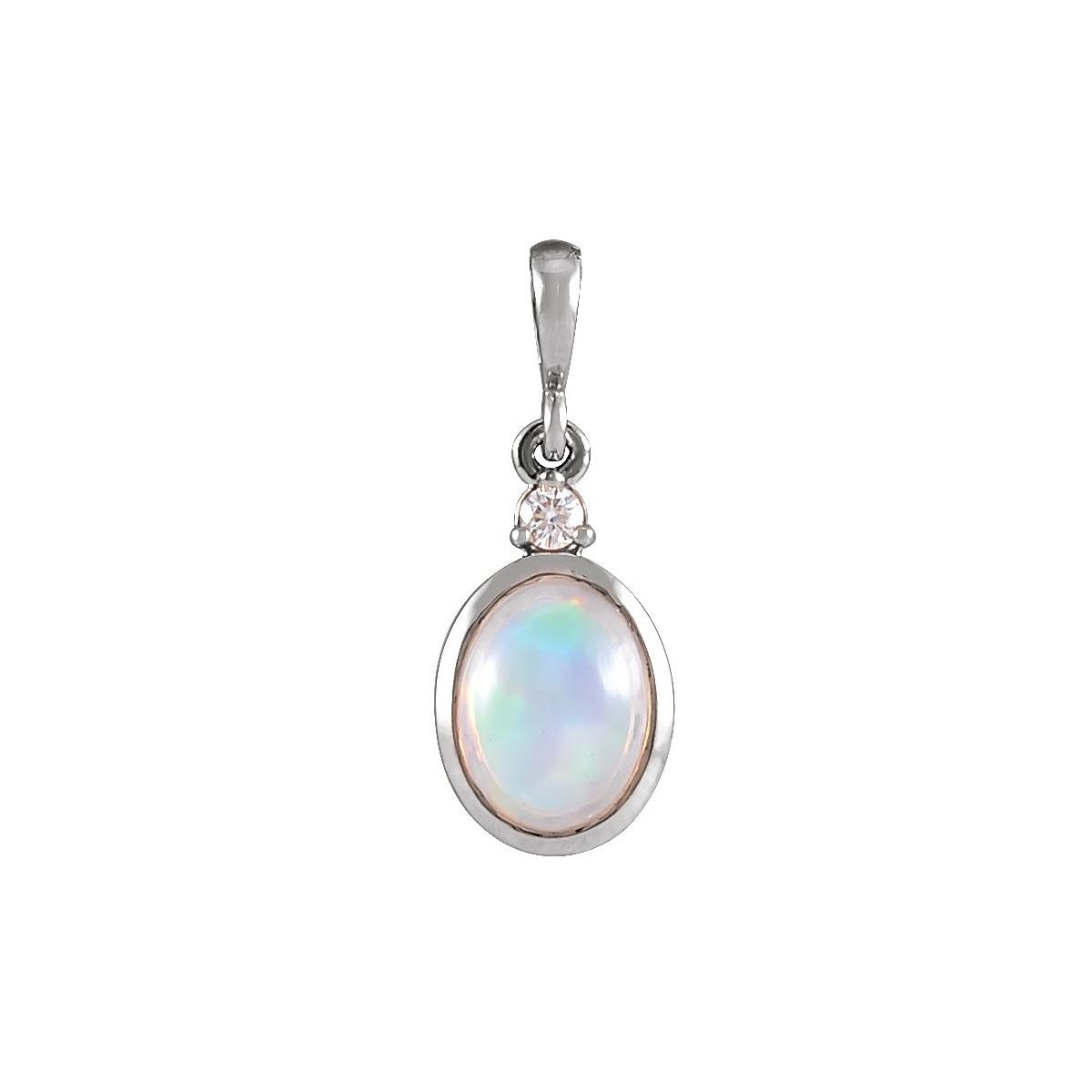
Opal: play of color
Precious opal diffracts light through microscopic silica spheres into shifting patches of spectral color, the play-of-color that makes each stone unique. White opal shows it against a light body; black opal, mostly from Lightning Ridge in Australia, shows it against a dark body and is the most valuable form. Crystal opal is transparent with color floating inside; boulder opal keeps a skin of its host ironstone.
Value follows the brightness and range of the color play, the pattern, and the body tone. Red flashes rank above green and blue; broad rolling patterns rank above pinpoint.
Opal is 5.5 to 6.5 in hardness and contains water, so it dislikes knocks, dryness, and sudden temperature swings. Pendants and earrings are its natural home; opal rings want bezels and thoughtful wear. Beware doublets and triplets, thin opal slices glued to backings, which are fine at honest prices but are not solid stones.
Tourmaline: every color
Tourmaline spans pink, red (rubellite), green, blue-green, blue (indicolite), the neon copper-bearing Paraiba blues, and stones with two or more colors in one crystal, including the pink-and-green watermelon.
At 7 to 7.5 hardness with no troublesome cleavage, tourmaline is a genuinely practical ring stone. Pink and green stones offer outstanding color per dollar; Paraiba-type material is the exception, priced like the rarity it is.
Choosing between them
| Consideration | Opal | Tourmaline |
|---|---|---|
| Visual signature | Unrepeatable play of color | Rich single or bicolor hues |
| Everyday rings | With care and a bezel | Yes, comfortably |
| Care level | Gentle: no ultrasonics, avoid impacts | Ordinary care |
| Value focus | Brightness and pattern of color play | Purity and saturation of color |
Common questions
Do opals really dry out and crack?
Some material from certain fields can craze over time; quality Australian opal is largely stable. Buying from a seller who stands behind the stone matters more with opal than with almost any other gem.
Is watermelon tourmaline natural?
Yes. The crystal changed chemistry as it grew, pink core to green rind. Slices and fancy cuts show it off, and no two look alike.