
The Anatomy of a Ring: Every Part, Named
Every trade has its names for things, and jewelry's are old and occasionally lovely. Knowing a dozen of them turns product descriptions from fog into information and makes any repair conversation twice as clear.
Here is the tour of a ring, from the stone down.
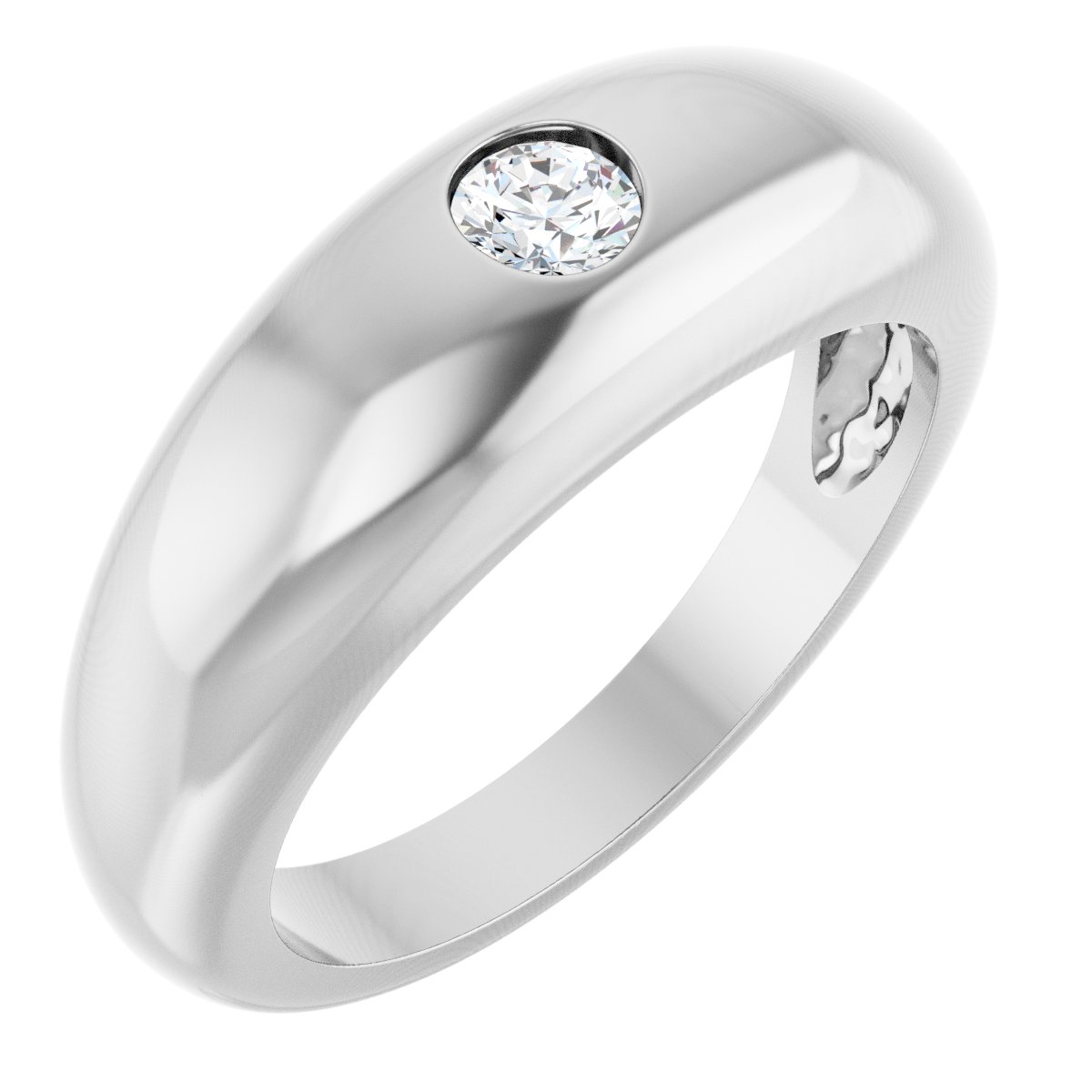
Up top
- Head: the assembly that holds the center stone; often a separate manufactured part chosen for the stone's shape and size.
- Prongs (or claws): the metal fingers gripping the stone; their tips take the world's wear on the stone's behalf.
- Basket: the open cage under the stone formed by the prongs and their connecting rails.
- Peg: the post by which many heads mount into the ring; a peg-head solitaire is the classic construction.
- Bezel: when instead of prongs a rim of metal encircles the stone entirely.
The middle
- Gallery: the openwork area beneath the stone, visible in profile; often decorated, sometimes hiding a surprise diamond.
- Bridge: the part of the ring's underside that crosses beneath the head, resting against the neighboring finger.
- Shoulders: where the band rises toward the center; cathedral shoulders arch, straight shoulders do not.
- Accent stones: any smaller stones set along shoulders or halo; melee is the trade word for tiny diamonds.
The band itself
- Shank: the band, in trade terms; a repair quote mentioning a new shank means replacing the circle of metal itself.
- Sizing area: the bottom of the shank where resizing cuts are made, kept plain on well-designed rings.
- Profile: the shank's cross-section shape; comfort fit means a rounded interior.
- Euro shank: a squared-off bottom that resists spinning on the finger.
- Hallmarks: the stamps inside the shank recording metal fineness and maker.
Why the names pay off
A listing that says cathedral-shoulder solitaire with a six-prong basket head on a comfort-fit shank now reads as a picture. And when a jeweler says your prong tips are thin and the shank has worn to half thickness, you know you are being told about the claws and the band bottom, the two places rings genuinely wear out, and can judge the quote accordingly.
Common questions
What does re-shanking mean and why would I need it?
Replacing the worn bottom half of the band with fresh metal. Decades of wear thin the shank until it bends or cracks; a re-shank renews the ring's foundation while keeping its top intact. It is a standard rescue for beloved older rings.
What is melee?
The trade term for small diamonds, typically under a fifth of a carat, used in pave, halos, and accents. Pronounced meh-lay. A ring with a total weight built from melee sparkles plenty but prices differently from one big stone; our carat guide explains why.